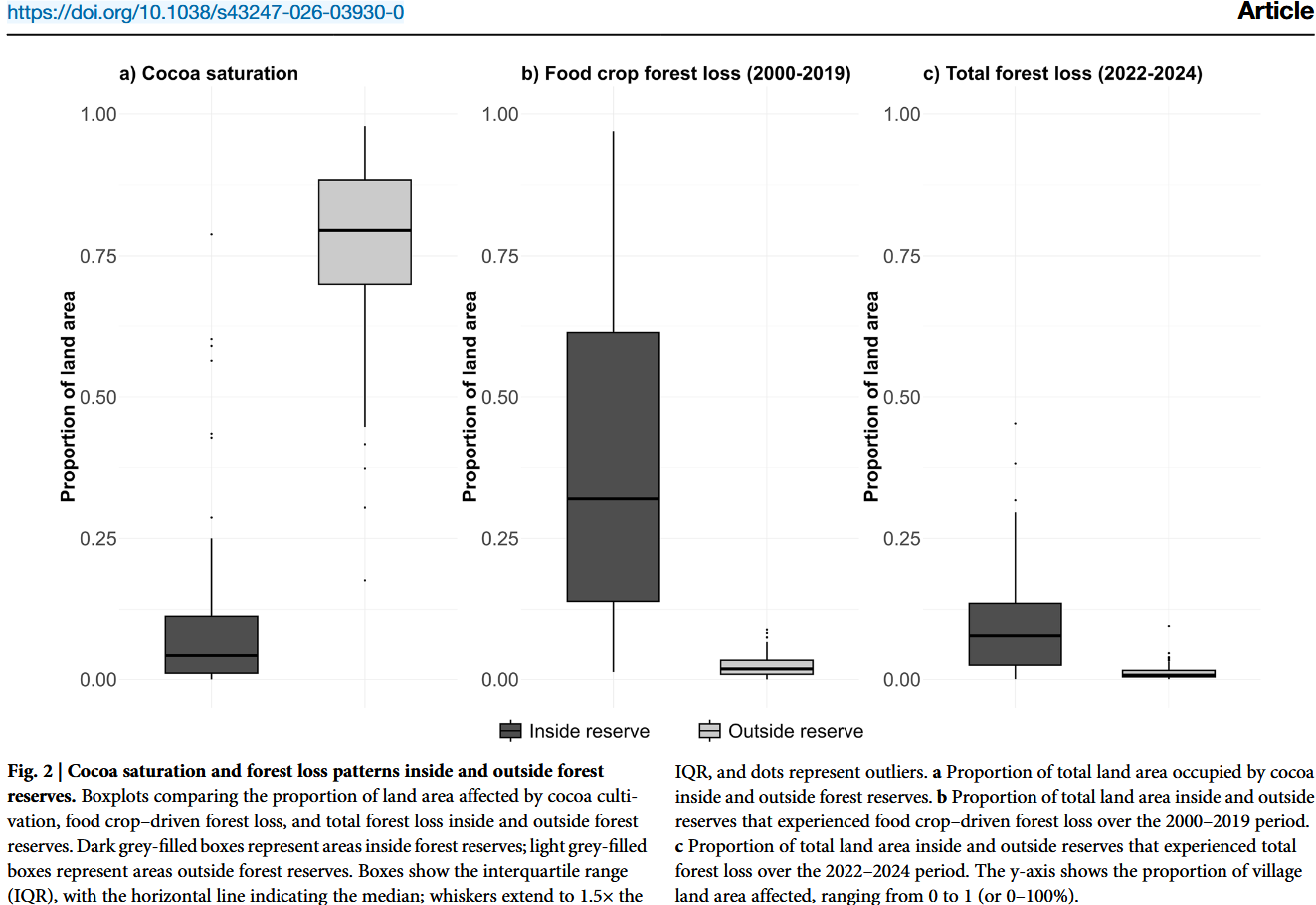
Cocoa farming is a major driver of deforestation in West Africa. While sustainability policies like zero-deforestation commitments aim to reduce forest loss from cocoa, they overlook a critical gap. When cocoa expands onto existing farmland, farmers may shift food-crop cultivation into nearby protected forest reserves instead. We analysed satellite imagery and farmer interviews in Ghana to test whether this land displacement occurs and whether sustainability programmes prevent it. From 2000 to 2019, areas with more intensive cocoa farming were associated with greater forest loss inside reserves from food crop cultivation. In 2022–2024, villages with greater exposure to sustainability programmes showed reduced forest loss. Agroforestry (growing shade trees on cocoa farms) showed no protective effect, likely due to minimal adoption. These associations suggest current policies fail to address indirect deforestation from land displacement and highlight the need for land use governance addressing both direct and indirect pressures from cocoa.
Reg&Gov
The need for improved public transparency in the era of due diligence regulations
To address environmental and human rights issues in global commodity supply chains, governments increasingly require information from companies on their sourcing, as part of due-diligence regulations (DDRs). This shift towards accountability to the regulator rather than to the public calls into question the role left for public transparency. In this perspective piece, we argue that public transparency is actually complementary to DDRs—addressing their incomplete coverage of global supply chains and sustainability issues—and corrective to DDRs—mitigating their undesirable side effects. We illustrate these points with data on West African cocoa supply chains. Public transparency thus remains crucial for supply chain sustainability governance in a DDR era, and we encourage stakeholders to keep demanding its improvement.
AJAE
Price incentives and unregulated deforestation: Evidence from Indonesian palm oil mills
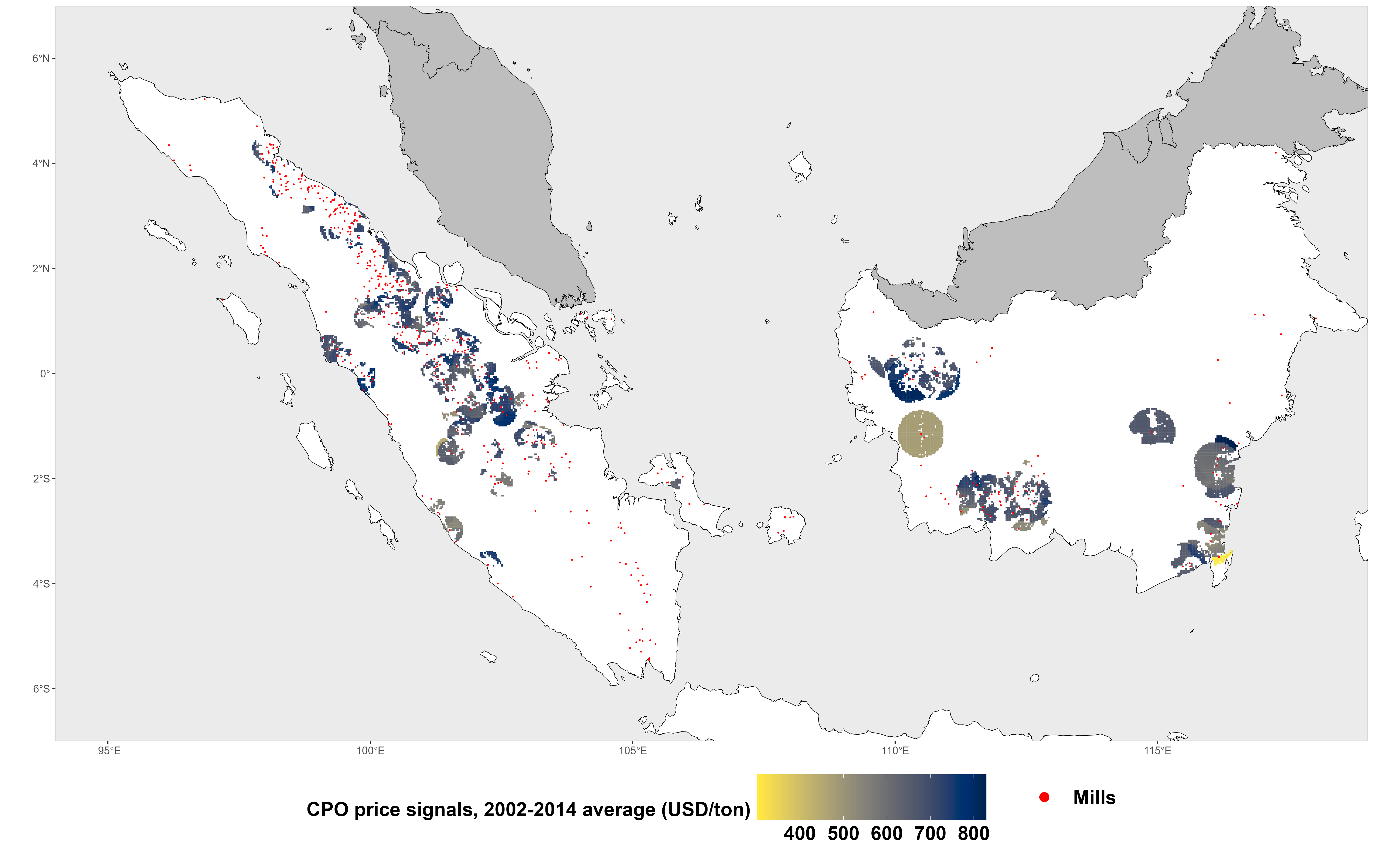
Global demand shifts and supply chain interventions have the potential to reduce palm oil’s environmental footprint, especially in otherwise unregulated plantations. This ultimately depends on deforestation reacting to prices in upstream, complex plantation–mill systems. We produce the first microeconomic panel of geolocalized palm oil mills, and we model their influence on palm plantations across Indonesia where the issue is most critical. We leverage our data granularity and the nature of the value chain to isolate downstream mill-gate price shocks that are exogenous to deforestation upstream. We find a positive elasticity to the mill-gate price of crude palm oil, in general and in two specific cases of unregulated deforestation—for smallholder plantations and for illegal industrial plantations. However, smallholder deforestation decelerates as palm fruit prices increase. These results inform the design of fair and effective conservation policy.
2025
ERE
Indirect Land use Change Mechanisms: Tests from Biofuel Mandates and Pantropical Agriculture
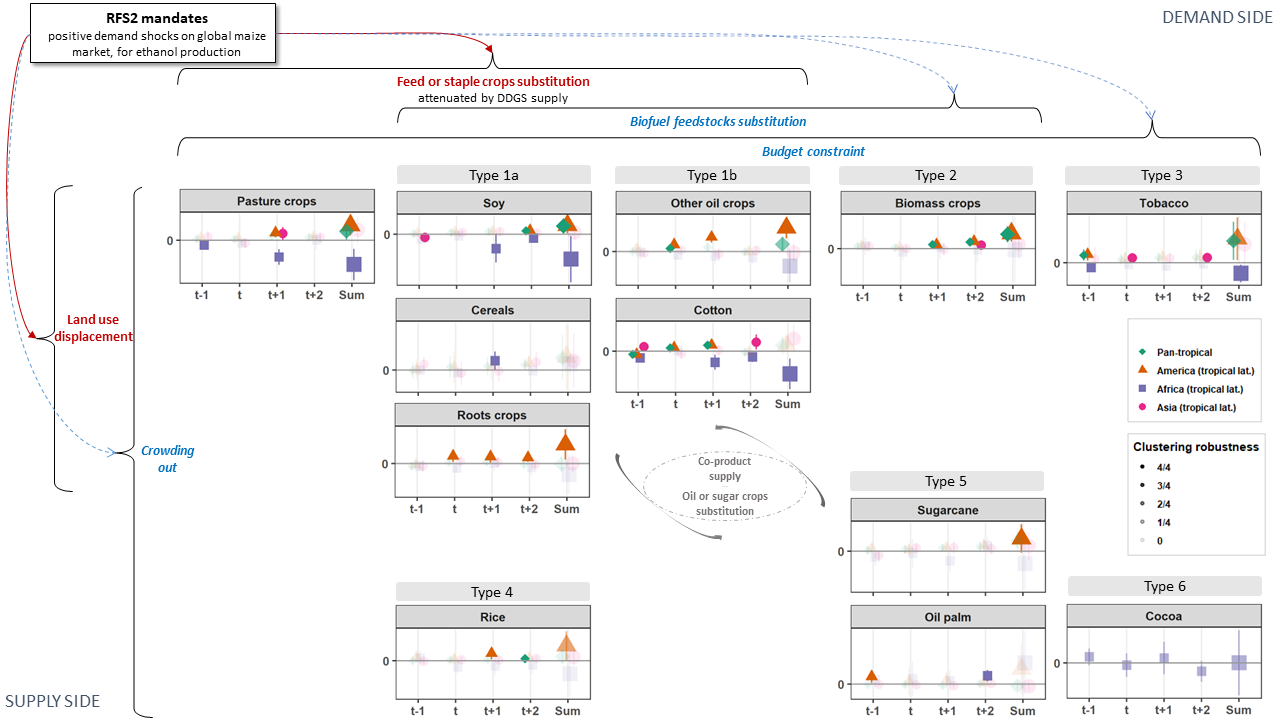
Agricultural supply and demand shocks can indirectly cause environmental damages as they propagate across space, time and commodity markets according to mechanisms that have been extensively theorized and simulated, but barely verified empirically. In this paper, I propose a mapping of these indirect land use change (ILUC) mechanisms to major commercial crops. Within this framework, I derive empirical tests of ILUC mechanisms formally, based on interaction effects of local crop-specific conditions and global market shocks. I can run some of these tests in a natural experiment by leveraging the pre-determined nature of the biofuel mandate agenda under the second Renewable Fuel Standard program (RFS2) - one of the largest shocks on global agricultural markets. This detects empirical signals of ILUC for eight commercial crops across the tropics, yielding four results. First, some estimates corroborate a land use displacement mechanism specifically. Second, mechanisms transferring expansion incentives across crops in the same – rather than opposite – direction prevail, including in most critical deforestation contexts. Third, other estimates nevertheless support mechanisms turning maize demand increments into lower incentives to expand other crops. Fourth, ILUC mechanisms occur on both global and domestic markets and their influences vary across the tropics. Overall, these results warn about the reality of ILUC, and partially identify how it occurs.
ERFS
Direct and indirect cocoa deforestation in the forest landscapes of Ghana
C. Renier, T. Addoah, V. Guye, R. Garrett, G. Broeck, and P. Meyfroidt
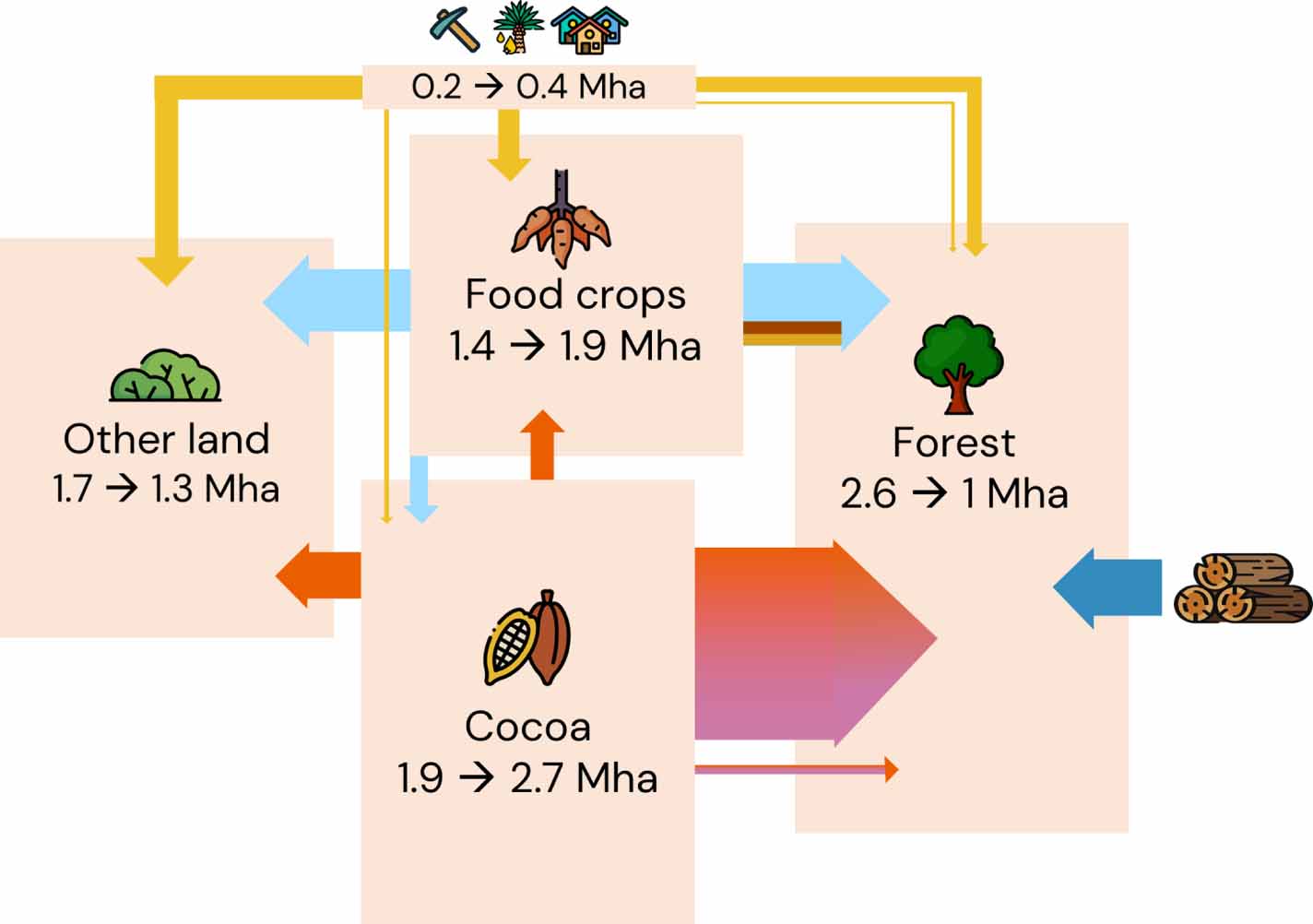
Across the tropics, cocoa is one of the main drivers of deforestation. In Ghana, the world’s second largest cocoa producer, the role of each of the main economic sectors in driving deforestation remains, however, contested—with cocoa, mining, logging, and plantations each blaming the others. Previous work has also suggested that food crops are displaced into forests by cocoa expansion, raising concerns about indirect land-use change and impacts on food availability. Here, using satellite-based maps and secondary data, we quantify the direct deforestation and forest degradation between 2000 and 2019 in the entire cocoa-growing region of Ghana which is attributed to the land uses (LUs) detected in 2019. Then, we use a land-balance approach to assess the indirect role of the expansion of LUs in deforestation and degradation for food crops. We find that cocoa was the major direct driver over that period (∼57%), followed by food crops and logging (∼39% in total), then by mining (3%), tree plantations (2%) and settlements (<1%). Roughly 30% of the deforestation and degradation of land used for food crops in 2019 was attributed to their displacement from elsewhere by other LUs—with 15% (9%–17%) due to cocoa expansion into food crops. In cocoa-saturated regions, indirect deforestation is likely to increase as forests only remain in gazetted areas, where growing food crops is either legal or more tolerated by officials than cocoa. Accounting for its direct and indirect role, cocoa was associated with ∼20% of the deforestation in gazetted areas. This research highlights the need to move away from sustainability efforts targeting one single commodity at a time to more transformative approaches that develop a coordinated vision across the food and land system. Such a vision would regulate multiple commodities holistically, address lock-ins, and reconsider the overall use of land systems in the region (how much land should be dedicated to cocoa, how and for whose benefits).
2022
ERL
Committed to restoring tropical forests: an overview of Brazil’s and Indonesia’s restoration targets and policies
C. Dockendorff, S. Fuss, R. Agra, V. Guye, D. Herrera, and F. Kraxner
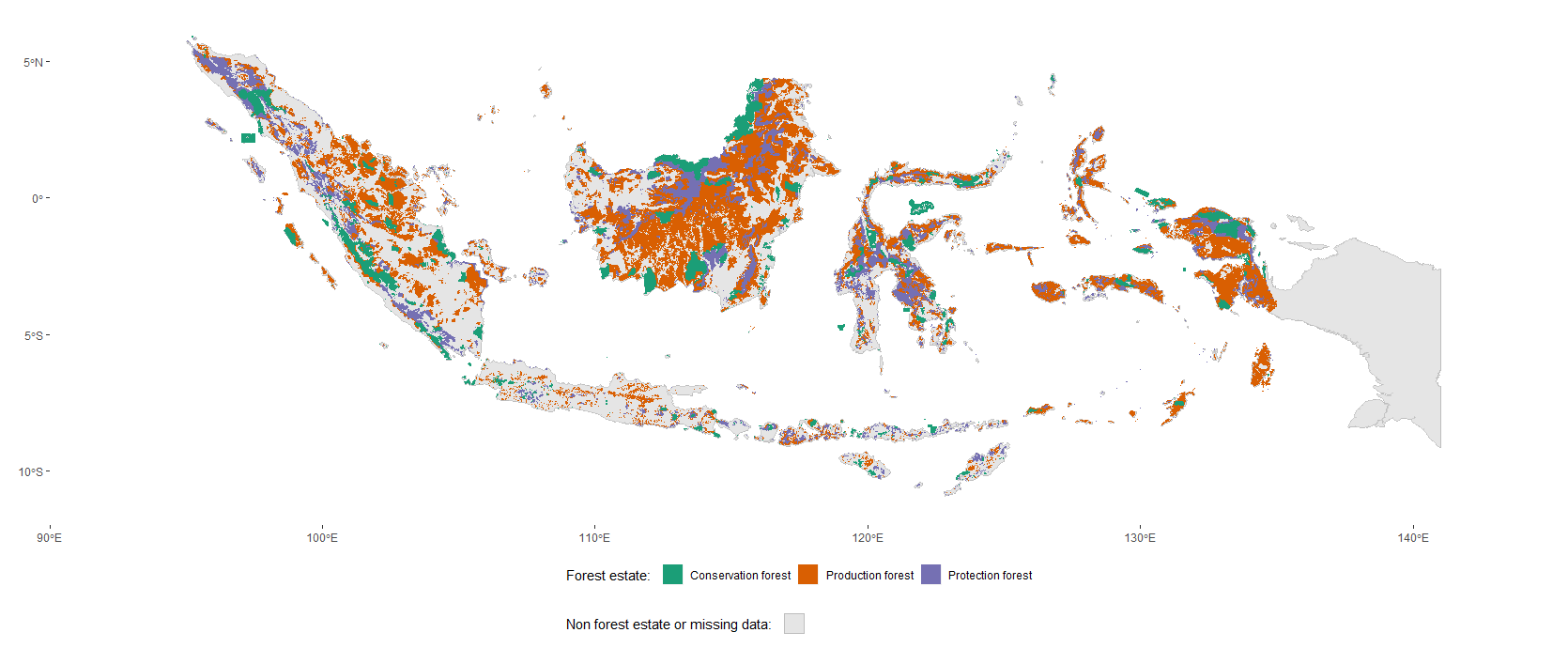
The restoration of tropical forests has become a popular nature-based solution for climate change mitigation, protection of biodiversity, and improving the livelihoods of local populations. The Bonn Challenge and the UN Decade on Ecosystem Restoration underscore the international momentum of the restoration movement, with many countries committing to restore millions of hectares of deforested and degraded land in the next decade. Brazil and Indonesia are among the ones with the most ambitious restoration commitments globally. Since both their economies are highly dependent on the export of agricultural commodities, reconciling economic growth with environmental sustainability will be a major policy challenge. In this paper, we (a) identify the main restoration targets and the policies supporting their implementation in both countries, (b) provide a descriptive overview of these restoration-supportive policies, and (c) discuss the main challenges that Brazil and Indonesia face in the implementation of their restoration commitments. We find that Brazil has an explicit and dedicated strategy to achieve its restoration target, but that recent political developments have weakened environmental governance in the country, affecting the implementation of its restoration commitment. In the case of Indonesia, we find that the government has rather focused and progressed on the restoration of peatlands and mangroves, whereas its commitment to restore forestlands has yet to benefit from a dedicated plan that allows to coordinate policies and agencies’ efforts towards the achievement of its restoration target.
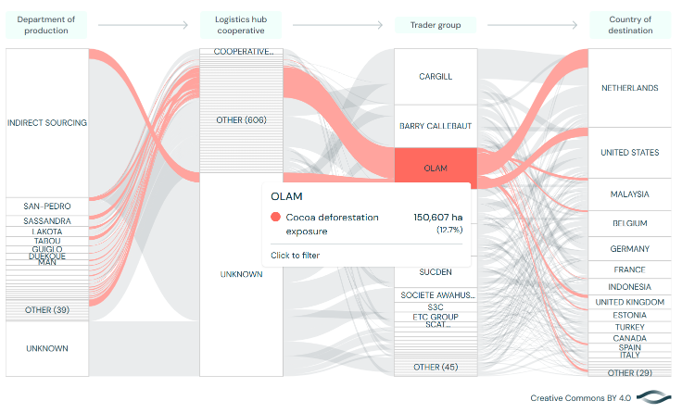
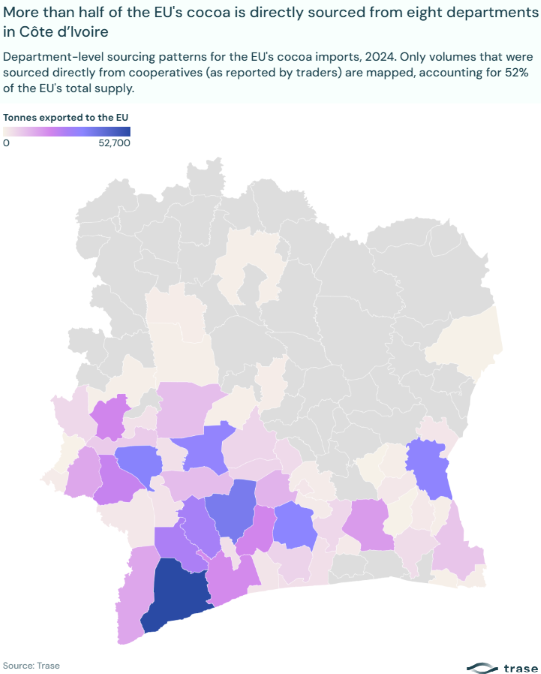
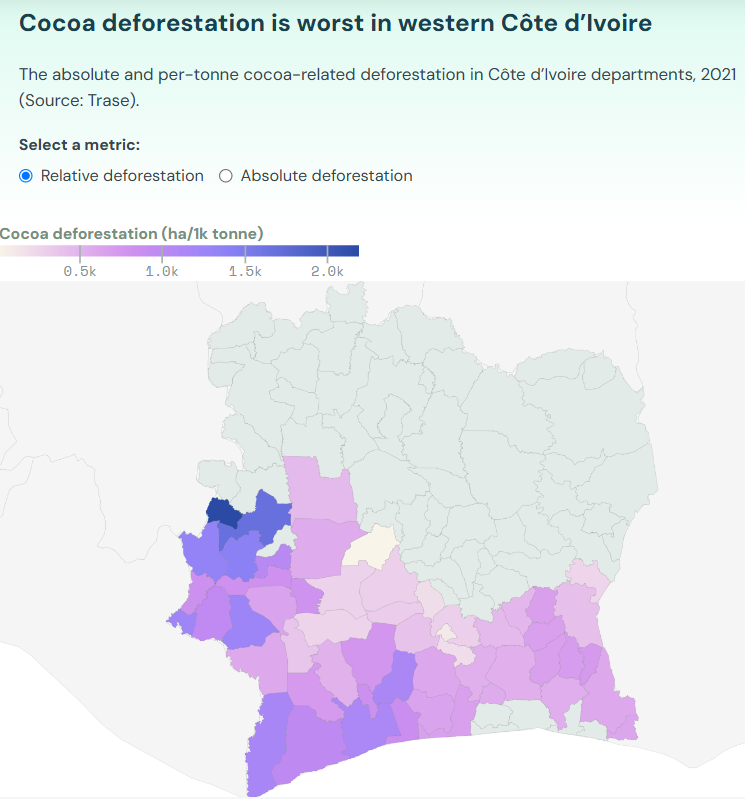
Trase maps global supply chains of agricultural commodities, showing how consumer markets are linked to deforestation and other environmental impacts via their imports. This explainer updates the supply chain map for Côte d’Ivoire cocoa with new data for 2023 and 2024.
Putting smallholder farmers at the heart of EUDR implementation
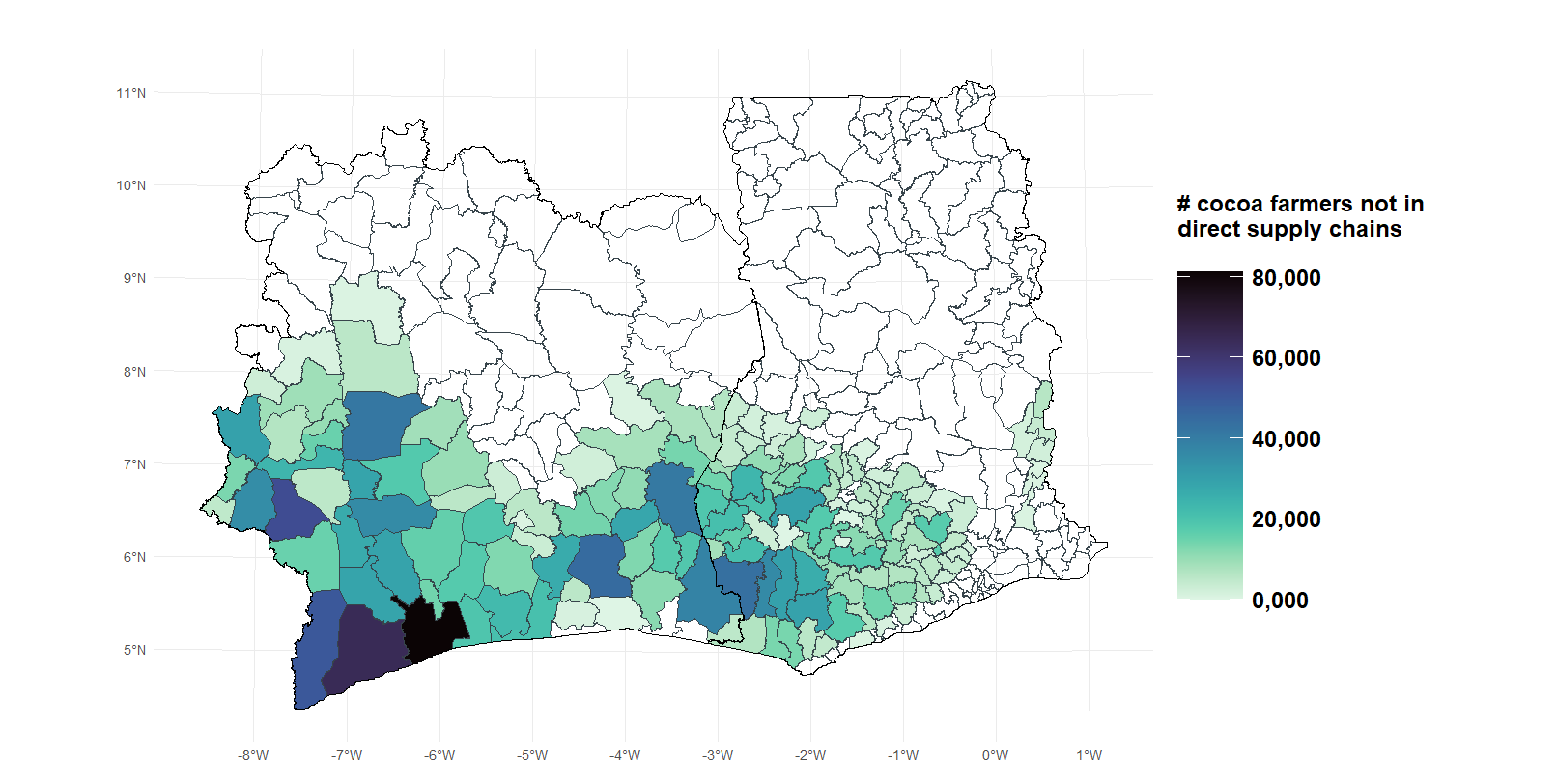
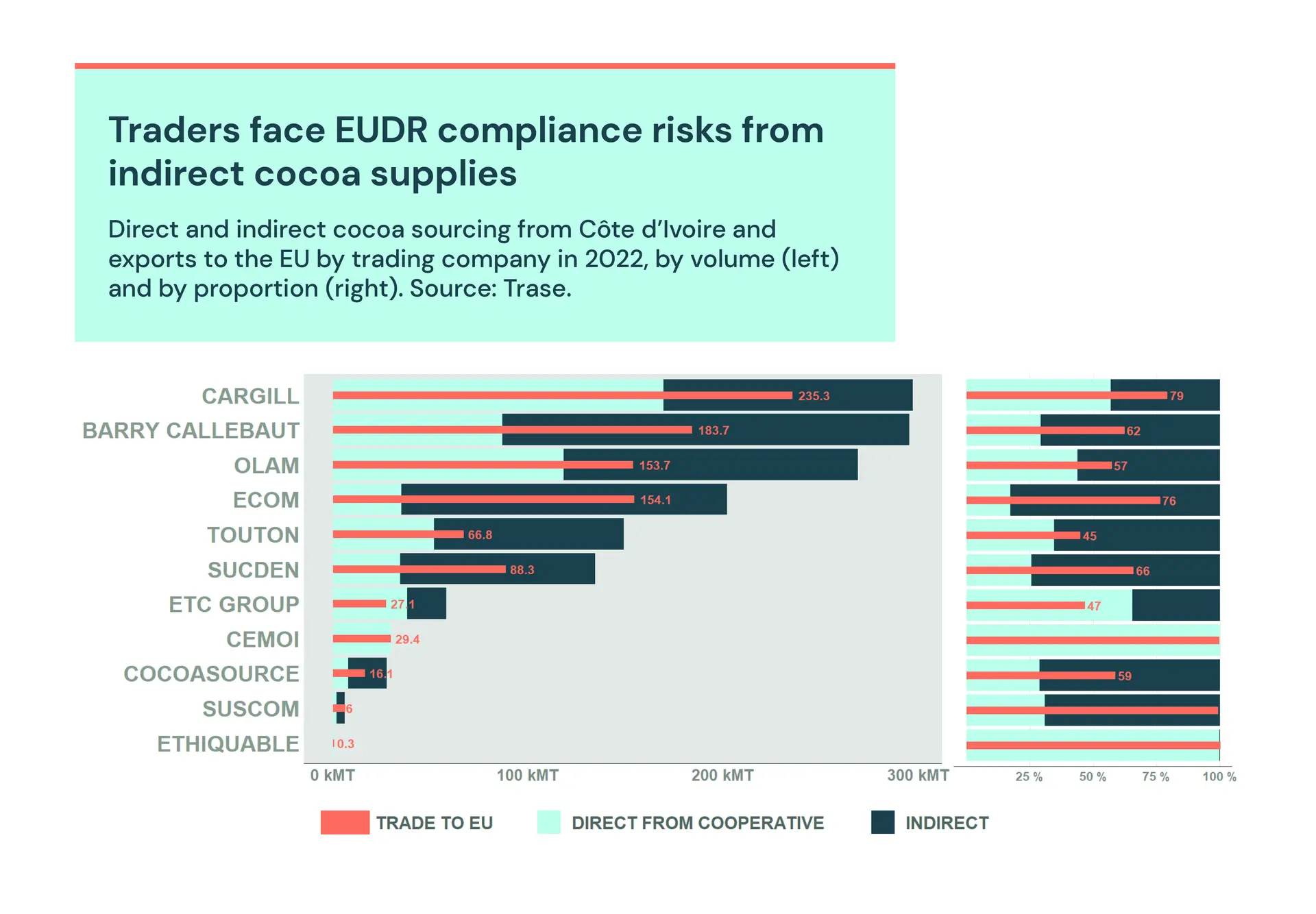
Trase research shows huge variations in the traceability of cocoa from Côte d’Ivoire and the likelihood of whether supplies will comply with the EU deforestation regulation. Support for smallholder farmers is needed to avoid excluding them from the EU market, as companies prepare for regulation.
Trase maps the international trade in cocoa from Côte d’Ivoire revealing which trading companies and consumer markets are most exposed to deforestation.
Cocoa traders fall short on supplier disclosure in Ghana
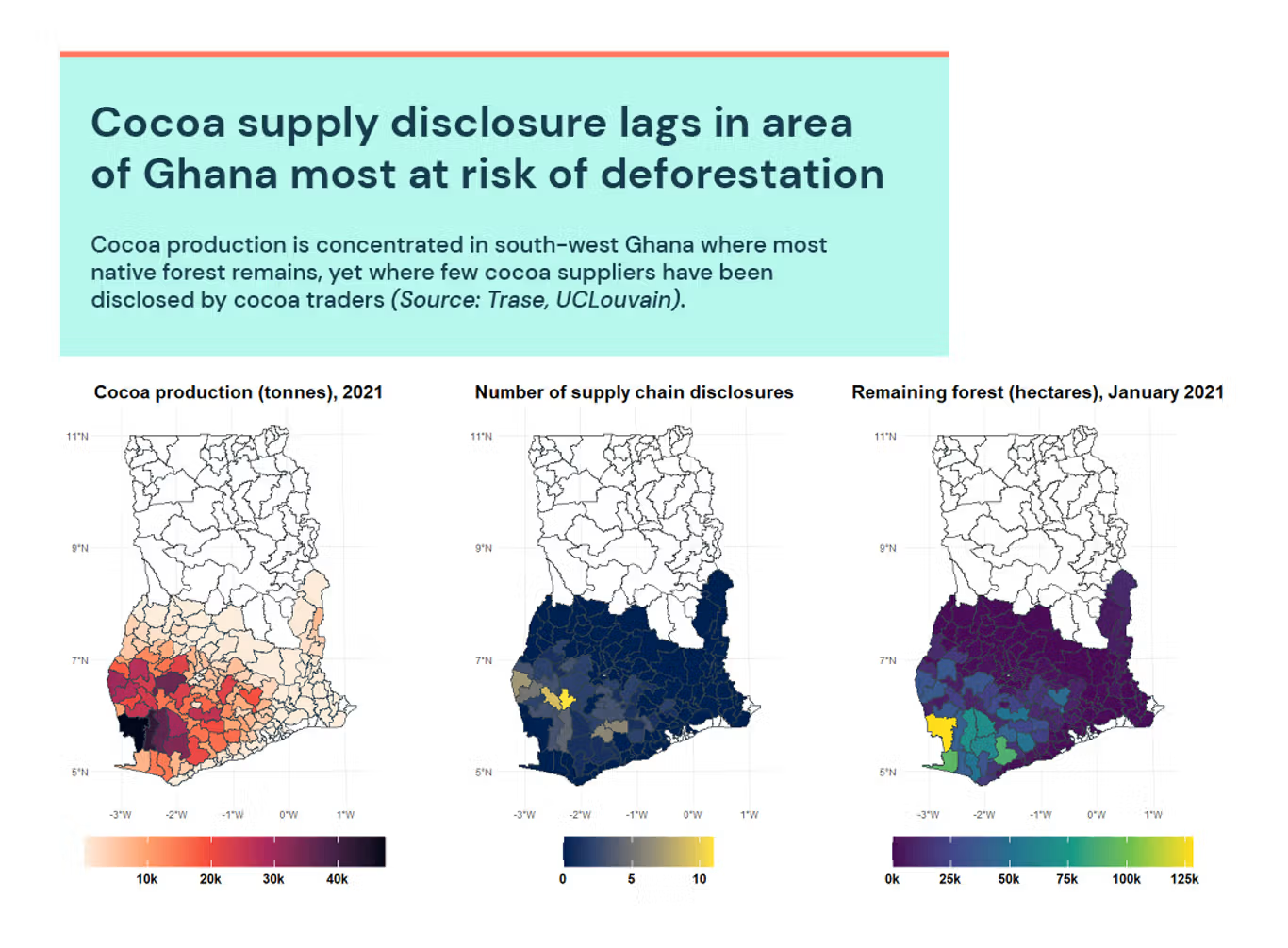
Companies exporting cocoa from Ghana are failing to publicly demonstrate that their supplies are not grown on deforested land, according to research by Trase, raising questions over their sustainability commitments and their preparedness to comply with the EU deforestation regulation.
Datasets
Côte d’Ivoire cocoa cooperatives: data and methods
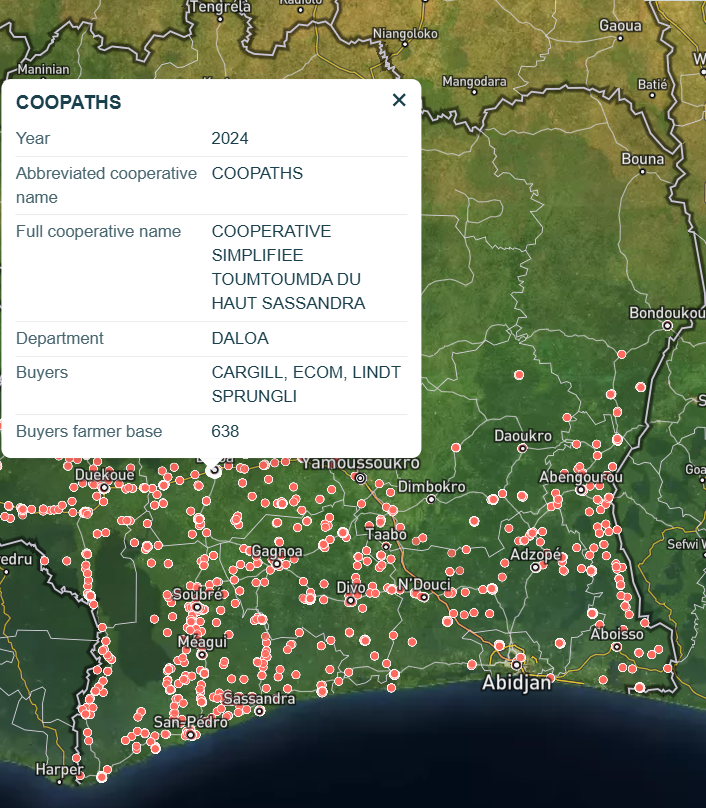
This database records the cocoa cooperatives in Côte d’Ivoire and their attributes, including geographic coordinates, departments, names of the companies disclosing to buy from them in a given year, and supplying farmer base sizes. This database builds on the Cocoa Accountability Map, initially provided by Might Earth, and on further collected public disclosures by companies trading in cocoa or manufacturing cocoa products, and by certification bodies (only Rainforest Alliance currently) since 2020. (2024-03-22)
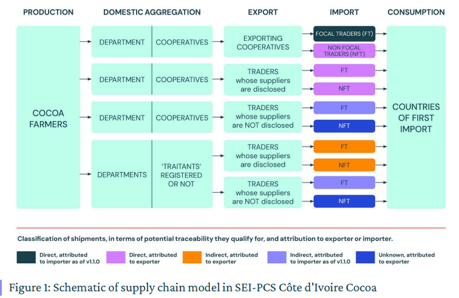
Trase maps supply chains for agricultural commodities, making it possible to link products and supply chain actors with specific areas of production, and associated sustainability risks and opportunities. It uses a generalised supply chain mapping approach called Spatially Explicit Information on Production to Consumption Systems (SEI-PCS) as the basis for this work (Godar et al., 2015). This document describes the data and methods that Trase has used to map the cocoa supply chain in Côte d’Ivoire, called ‘SEI-PCS Côte d’Ivoire cocoa’, based on Renier et al (2023).